Reference

Showing posts with label Business. Show all posts

The Lean Energy Management Technique


Dear Energy Manager, 

If you were managing a young "startup" company you would be aware of "The "Lean Startup Movement" - a concept for refining objectives of small companies who are trying to "change the world" developed by a smart chap called Eric Ries.
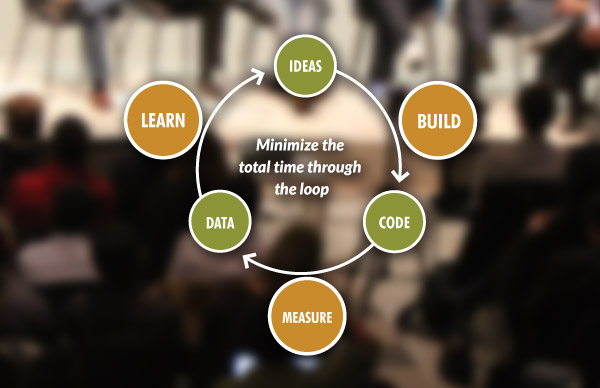
The Lean Startup Process http://theleanstartup.com
As an energy manager (in fact this is true for many managers), you may notice three things:
  1. You are also someone trying to change something 
  2. Your job is never done - success is somewhere you pass through on the way up
  3. You need to be lean (because there is never much fat in the energy budget)
I have argued before this puts energy managers into a context that is rather like entrepreneurial development. 

By definition you will not succeed !

Written like this, it sounds like a thankless and futile life, but it is not. What matters is not only improvement and enhancement, but the management of things that slip backwards and elimination of things that do not work.

This tells us three things:

Firstly - You are like a startup founder

You are in the midst of a circular process, which we can look at in a minute, and trying to find better ways of solving existing energy related problems. (i.e. disruptive innovation).

You reject the "its always been done that way" argument - you seek change.

Secondly - Some things do go wrong, (that's a part of life), but the energy manger responds.
  • by learning fast (and wasting the minimum during the learning process) 
  • by changing direction towards achievable goals
And Third - Some initiatives work. 

There are things that might take off, could be rolled-out. but need a development process, budgets and a management process ( a business model). Inshort these incubated ideas need nurturing (very much as an investor backs a small startup which shows some chance of rewards).

How does this look like founding a business ?

A business that does not have enough cash goes out of business, and a small company starts with very little cash. An energy management project is the same (examine it, try it, see if it flies, if it does roll it out, but if it doesn't kill it fast and move the budgets to some possibly better alternative.

A business is like a series of experiments ("I think this will sell", "let's try offering this", "maybe people will come back if we").

These experiments succeed or fail. Like you the startup company has limited resources - if it is going to fail, you need to "fail fast", that is to say stop digging! In the startup world this is followed by a "pivot" - ie a change or improvement in direction.

The very same is true of an energy manager, you have limited social capital, credibility or funds, and when these dry up you are out of business (literally and perhaps in a very personal and painful way).


Why does intelligence matter ?

Measurement (against expected targets) is the only way of knowing if it is working. 

It amazes me when an energy manger is conned into buying some "snake-oil" product and rolls these out because the salesman "promised it worked". We have seen this in the biggest engineering companies of the world, in the smartest money hungry companies, and in highly respected research establishments. Honestly, when someone finds a way of getting more calories out of a drop of oil by waving magnets, crystals or pyramids over it, I will hang up my hat - Meanwhile the laws of Physics Rule!

So every experiment (or hypothesis) regards how you will save money should have some acid test. You need to know if it works (in hindsight - not whether you believed at the outset - we can all convince ourselves).

Need for decisiveness

Proverbs 26:11 tells us: "As a dog returneth to his vomit, so a fool returneth to his folly." (King James).
Whether you believe in something or not initially, if it does not work - don't do it. It is far easier to keep trying something that you once believed in. But that is foolish. So the best approach is to define your criteria for success up front. Then test, test, test. And if it works refine, refine, refine. And if it doesn't reject and move on.

Why does speed matter ?

Failing fast, is not only about noticing the sooner you stop digging the less it hurts. It is also about recognizing that you have a limited time (runway in startup parlance) before your money or resources run out, and you can only bankroll a limited number of experiments. Going to corporate finance with a plan is much easier if you stopped the financial haemorrhages that did not work, before the well ran dry.

More importantly failing fast is a mind set. If you get stuck in a rut, momentum builds up and its much harder to stop the runaway. So the key idea of fail-fast is to learn at the earliest possible opportunity, with least possible cost when to change track.


And back to the top...

For convenience I have repeated the chart here. 
If you click it gets bigger

The only significant difference is that bureaucrats in energy management and international standards ISO 50001 seem to like long words like "Implementation and Operation" or "internal Audit"  , but I think we get the picture :)
IS0 50001 process concept (links to kWIQly)


For me the most telling words are those in the middle of the lean-startup movement diagram.

So, respond powerfully, intelligently, and rapidly, you know why we are called kWIQly  - but these words could be the survival mantra of the energy manager

"Minimize the total time through the loop"

Related articles
Enhanced by Zemanta

Between a Rock and a Hard Place

The typical energy manager has two conflicting drivers that meet to form a single objective.
Energy Management Dilemma
Between a Rock and a Hard Place ?

The conflicting drivers are naturally the inputs.

A) What is being done
B) What it is costing

Note "what is being done" is really producing output eg "widgets manufactured" or"meals served" but this is an input to the energy management perspective - Our energy manager reads it from a screen.

3D energy management

3D webgl enabled chart showing energy managers when waste occurs
Screenshot of interactive 3d performance model
kWIQly have been invited to showcase our new demo at the O'Reilly Fluent conference (javascript and beyond). Since many readers will not be in San Francisco. I thought we should give you an idea of what it can do for energy managers.

If you like you can try it yourself at home:)

energy insight demo

A couple of the features need a modern browser with a webGL graphics card to see 3D imagery of consumption and weather vs time.

So why not see if they work for you ?

If you drag your mouse on the diagrams and nothing happens you may need help to enable the functionality in your browser 

10 Smart-Meter Answers - why gas before electricity ?

Hopefully this short post will spark or fire up some debate.

Assume you have 100 buildings and 100 smart-meters and each building uses gas for heating & hot water and electricity for cooling and lights, socket loads etc. So each building for primary utility supply requires two smart-meters without considering water.

So should you install smart gas meters then electricity or vice-verse ? I know what I think - read on..

Waste,waste everywhere, we never stop to think


Coleridge wrote http://en.wikipedia.org/wiki/The_Rime_of_the_Ancient_Mariner with the famous line

"Water, water, every where,Nor any drop to drink."


English: Samuel Taylor Coleridge at age 42.
English: Samuel Taylor Coleridge at age 42. Wikipedia)

Where our hero is blamed for their desperate thirst with sea water all around.  You might feel like me a more relevant modern take would be...

A patronising post on energy savings

So today a rewarding look at a couple of charts to look at ( not as immensely boring as it sounds) ...

But first  - Imagine if you will, that you had previously been in contact with us - the upshot being that for a very reasonable price you would be well served in the whole saving energy effectively department. Aren't you lucky - you (being wiser than most) can save time by not reading the rest of this post.

BACK TO REALITY
However, for the rest of you, it is only fair we tell a little about the things in energy management that excite us most.


Picture of a pie and pint taken for enwiki-p's...
A "pie and pint"  (Photo credit: Wikipedia)

Consider for a moment a pub, not just any pub, but a "better" pub. If you have been paying attention you will also know that boiler energy saving is like running a bar !

BTW - a word to the wise ! -  If you have not been there do have a look - firstly for the *ahem* brilliance of the analogy it offers, and secondly for the wonderful picture at the top of the post.


You have to love a disaster it - clearly he does ! 

And what is better than running a better pub I hear you ask (rhetorically) ? -
"Why - drinking in a better pub of course ! "

So, the problem today is as ever how to address the problem
- How do I get to be sitting in a better pub ?

The answer naturally is that as an energy manager - you need one of three things :

a) A better job
b) If a) is not available - more respect in the job you have
c) Failing a) and b) - you need to gain respect.

And that is why we are here ...
CLICK TO ENLARGE
If you did so (that is - click to enlarge) you will have seen that the chart above is of a pub. The energy use to be precise - if you are smart you will be able to figure out when they are open. (And this is why you should know it's a pub!)

The faint line at the top is the most this pub spends (by hour of week).  The green is what it should be using if all is well under the current conditions - and the red - Well the red is the current weeks level of "spillage". That which is to be avoided!
CLICK TO ENLARGE
OK - I was just kidding ! - naturally the chart doesn't show you when they are open. It does show you when they are using energy, and that is not the same thing !

If you are observant you will see that the energy use is "even better than ideal" on Tuesday evening - In other words - a mistake !

Since nobody changed the time-clocks for Daylight Savings Time.

The mice are cosy before the pub opens, and the punters are cold when they leave in the evening.

What is that ugly red spike at 9.am.  ?

The ugly red-spike is a boiler boosting hot water to above its necessary temperature.  We know this because it then switches on and off all day.  This is known as slow dry cycling - the load does not warrant the activity - so the boiler overheats the system, then slowly cools down before doing the same again.

If it just did a little when it was needed - it would cost less, the room temperature would be more stable (more comfortable - and less likely that someone opens the door for a bit of fresh air - as often happens in autumn).

Now there are lots more things I could tell you - like the implications of the high load line over-night (maybe I'll post on that another day)...

So you reward for having got this far is that you are better informed (maybe) - or perhaps more likely - you disagree with drinking beer  - in which case please feel free to express yourself elsewhere !
Enhanced by Zemanta

Big Utility or Little Fish (you will be swallowed)

Barbecue fire
Barbecue fire (Photo credit: Julio Martinez)
Did you ever put fuel or gas on a barbecue to get it going ?

Yikes - That's what I felt like after my recent post

Energy co. wants me to use less - really ? !

Anyone would think I just stood on a nerve, pressed the right buttons, or dialled in a thermonuclear strike !

Some people thought my views absurd, but others agreed strongly.

Nuclear weapon test Mike (energy yield 10.4 Mt)
Nuclear weapon test Mike (yield 10.4 Mt) on Enewetak Atoll. The  first hydrogen bomb ever tested, an experimental device not appropriate for use as a weapon. (Photo credit: Wikipedia)

As ever the truth lies somewhere between what you think you know and what others misguidedly believe !

The more visceral reactions I were mainly on LinkedIn - this correlates well to the fact that the American Utility industry is not what you might describe as a "mature free market".

(BTW why don't people comment ON the blog itself where everyone can see - it's like putting on a concert on the dark side of the moon ? )

The Dark Side of the Moon
The Dark Side of the Moon (Photo credit: Wikipedia)
The differences in views are geographically split - and depend on market circumstances and degrees of energy de-regulation.

In much of Europe you can choose your utility provider and mature commodity markets exist, whereas in the US there is very little utility competition - you buy from the local provider or you do without.

The idea that the US is a land of free markets is frankly naive when you look at electricity, gas, (even heat) , telecomms, waste disposal and indeed the essentials for life - water.

I have recently been invited to comment by http://www.pikeresearch.com on a related subject, regarding how limits to control technology expertise cause utilities to struggle with client services.

While it would not be appropriate to share what I have heard regarding their commercial research plans, I did write a response that I am free to share.  And it is worth noticing that they very much observe these trends by utility companies but acknowledge that are largely "invisible" as yet in the US.

So, in full knowledge that I probably pouring fuel on a fire that is already lit - here we are...

With a few notes for clarity as {edit}
>>

Dear (anonymous) at Pike Research


It seems you have dropped in on one of my absolute pet subjects for a good rant ! :)

Let me outline my first thoughts below - if these sound interesting I would love my thoughts to be considered (especially because any exposure is direct to utilities who are for us a key route to market).

Let me also offer the caveat that my exposure is mainly to European markets (which vary from totally deregulated to the local monopoly model that is more common in the US).

So the context  - Utilities like control system providers all sell largely unbranded commodities.
The floor of the Chicago Board of Trade, a maj...
The floor of the Chicago Board of Trade, a major commodities exchange in the United States. (Photo credit: Wikipedia)
{NOTE - this is where a competitive market is assumed - Your Mileage May Vary !}

Explanation - a kWH gas or electricity is better if cheaper  - A thermostat is not "better" if it says Honeywell, Siemens or Johnsons on the casing 0 - it either does its job or not - cheaper is better.

Even facility managers when contracts are replaced for big buildings will leave the staff in situ  to the new incumbent.  They sell numbers of people (security guards / cleaners - not "People").

{BTW this is mindless compliance to tender processes rather than "best practice" - much of the public tendering eg under OJEC / OJEU is at best a complete whitewashing façade to pay lip-service to competitive tenders - If the same people end up doing the job regardless of who wins the tender what is the point ? - This introduces bureaucratic middlemen and solves nothing from a corruption perspective}

Awareness of the actions of these commodities {what the people actually do} is 100% obscured at the point of sale:
English: Cotton candy Ελληνικά: Μαλλί της γριάς
US Cotton candy - English Candy Floss
(Photo credit: Wikipedia)
At the meter energy is sold, 
- the utility does not know if it is used to blow leaves or make cotton candy.

At the wholesaler control systems are distributed,
- the manufacturer has no idea if the relay will switch on a compressor, a fountain or a furnace.

The FM provider has no idea where the restrooms are in the building
 - this is for the cleaning staff to know.

This is possible because each provides "non-core" services to its client.  Hotels use all three of these "commodities", as do prisons, and schools, offices, Starbucks or  Mom and Pop stores and glass blowing factories.

So the true commodity supplier has no concept of the business model or operation of his client - it does not serve to know this

{ KEY POINT OF BLOG POST - HOW TO HANDLE THE SHIFT IN FOCUS }

However, look at the energy data and in the patterns these can reliably be recognised (Bakers burn gas at weird times of day in summer and winter, schools have holidays and offices have open hours).  

So given pattern recognition "meta-data" about the demand side exists. Demand side management from a utility perspective is about re-scheduling rather than avoidance and relies on pricing motivation, rather than pragmatism.  This is why there are numerous companies selling "more efficient XYZ or consultancy services "guaranteed to save".

Now consider this...

{The bizarre case of non-competitive communism promoting capitalism}

Unlimited heating was considered {theoretically - just as much as food} a human right in the old Soviet Union (and in Moscow gas still costs a few dollars for as much as you can use) - So there is NO motive to save energy (at first sight).

However, Gas not sold to Moscovites can be sold to the Ukraine, Germany, Switzerland, Italy and France AND it is.  So if you can get someone to use less for the same service fee (and be as happy), you have more to sell to someone else.
Major Russian gas basins
 (Photo credit: Wikipedia)

The implication is that where supply-side demand management co-operation and interchangeability exists (as is planned for the US but is a bit vulnerable) a preference for efficient clients exists (you can make more money from them - because they will pay more for less of the commodity if you provide attractive services  that help their efficiency ). 


These added value services differentiate and are more profitable, assist client retention and reduce client acquisition cost.

The implication is that Utility companies want to save clients energy (or increasingly will do so) but wish to be paid to do so (otherwise they face a price race to the bottom of the market).
English: Protests against shale gas drilling i...
Protests against shale gas drilling in Bulgaria (Photo credit: Wikipedia)

However even more interesting is that this need to control energy use better is one that even the big controls companies cannot manage, because they focus on hardware and not on selling relationships.

The key must be to gain insight regarding purpose - WHY energy is used.  This can be seen through correlation to time of day and week and weather conditions, but not by studying the control systems because implicit in adoption of the control system as an efficiency yardstick is the assumption that control is as necessary rather than merely sufficient to achieve past political objectives (like those boilers in Moscow ) "!

Utilities will achieve effective demand side management not through the introduction of gadgetry, but by understanding how why and what their clients use energy {for}.  - This is not their current focus - bar some more progressive exceptions.

>>

Conclusion 


So - as markets mature (and competition takes place) commodity markets force profitability out of client bases. The inevitable response options to free-market demands of the utility provider are:
  • To maintain monopoly power at any cost
  • To develop anti-trust cartel practices (I make no accusations here - but others do)
  • To explore market differentiation and segmentation (fight the commodity labelling)
  • To diversify (funding capital projects etc)
  • To add service layers.
Now if you are a Utility and you still don't "get" this - look over your shoulder - you are a little bitty bit-player fish in the biggest global marketplace - You WILL be swallowed !

James

PS - If on the other hand you do "get" this - drop us a line - we can help !

Enhanced by Zemanta

EnergyCo. wants me to use less - Really ?

OK - it sounds improbable ! In fact it sounds about as likely as going to a great 
restaurant and hearing...

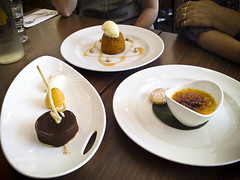
Desserts from JusQytly
 (Photo credit: laRuth)

"but wouldn't Madam be happier without that fattening desert ?"

or being greeted at the supermarket checkout with a patronizing...

"Oh but Sir, really ! - maybe we can help you put some back ?"

But they do because...

They have a good reason which makes them more money ! 

So next time they contact you and ask if you want to spend less - maybe, just maybe it's worth listening. I'll tell you why...
English: A look inside a standard, thyristor r...
Inside a standard, thyristor regulated, 500 W drill. (CMI 500E) (Photo credit: Wikipedia)


They understand "why you buy". 


Utility companies sell an easy way of getting a job done !  


Think about it, when you pick up a power tool, say a drill, what you really "want" is holes in the wall - not energy. 

When you switch on the washing machine, what you are "buying" is fresh clean clothes.


Energy is only a means to an end - an easy one. 


English: A photo I took myself of two NiMH AAA...
(Photo credit: Wikipedia)

Convenient costs more - 5,000 times more !

Electricity has to be so convenient, that they don't just bring it to your door, you  have it delivered to special holes in the wall. 


Even that's not enough, we want it cordless and portable: iron, telephone, remote control, iPod - energy - wherever its wanted!


Electricity in an AAA battery costs roughly $890 per unit or "bit" of energy instead of under 10 cents straight out of the wall (which took a huge installation effort ).


Oh and you have to go get the AAA for yourself and dispose of it afterwards ! 


Yes 8,900 times more money for the same thing a unit of electricity http://batteryuniversity.com/learn/article/cost_of_power

So yes they will deliver gas in bottles, but they would prefer to pipe it right to you - because its the most convenient way of selling it !

How do you like your water sir ? - On tap ! that's right. Right - fresh water is a human right!

Example EU energy label for washing machine; s...
EU energy label
(Photo credit: Wikipedia)
So I think most people would accept that what we are buying is in effect "convenience" sold in "units" ! 


 Very few people could tell you what electricity "looks like", or really care how gas combustion with oxygen makes heat.

People want, and pay for - what energy does, not how they get !

It follows, that if you can pay less for a job to be done just as well, you will be just as happy - or actually more happy.

If you use less energy to get the same job done you are just as happy - in fact if you care at all about the environment you are even more happy.


So less energy for the same job is more value !

This means each "piece" of energy is worth much, much, more if it is used wisely.

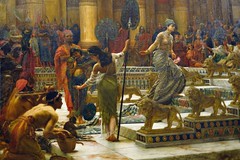
The visit of the Queen of Sheba to King Solomo...
Wisdom : The visit of the Queen of Sheba to King Solomon
 (Photo credit: jaroslavd)
If you know how to use it wisely - this profit is yours.


If kWIQly helps you to use less and still you get the same value then we can share the benefits.


AND, if the energy company sells you less for the less money - they can still benefit !


They need to produce less energy (they won't, but may just sell it somewhere else perhaps later anyway), you will also pay a modest service charge, which is profitable for them, while still saving you energy and money.

So it is a win-win situation. How can this be ? - Simple, the same job well managed is done for less, and the reduced cost is shared.

Energy management makes excellent sense whether you are buying or selling !

So, tomorrow I will write some more, meanwhile - there are some nice pictures in this post. Five ways weather affects energy bills

See you soon !
Enhanced by Zemanta

Too smart to be humble? - 5 steps down

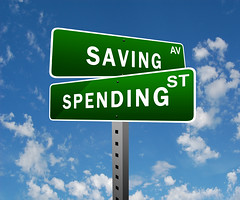
saving and spending
saving and spending (Photo credit: 401K 2012)
Now, I have noticed that there are at least two types of people, and the biggest difference relates to pride:


It is all about the difference of asking for or being handed credit and how you handle it

People who try to act smarter than they are.

They are easy to recognize.

This type of person is commonplace, they are greedy for praise or honors, but ultimately disappoint.


These are the people who sit around at work, complaining and doing little. 
Brad Feld distinguishes being busy from feeling busy in the busy trap


Perhaps, they do not have what it takes to contribute without being asked (or maybe they fear they will not get credit). 


Often they consider the menial tasks beneath them. These are the people who want to make sure they are promoted over their own level of competence.  


They are often not confident in themselves, full of bluster and seek to be popular at every step. Being popular is fine - just not at all costs. 


These people make great politicians!

Then there are people who surprise you.

 - they are harder to identify, and are in no hurry to blow their cover.

There are fewer of them, praise or honors are shrugged off, or passed on to colleagues - this is not false humility, it fits with seeing personal success as a side effect of contributing. 


These are the busy, happy people. They do work unasked, and regardless of others. They consider no task beneath them. They are confident, but often quietly so.  


Asked to do a job, they might say "I'll give it a go" with no song and dance and they rarely fail.


Have you ever heard the phrase, "If you want something done - ask a busy person to do it" ? - I think this is why. 


What are you ?

If you ever noticed how poor people seem to be unreasonably happy or just don't care too much about their looks - you are most likely in the first group - you are looking down ! -  there are some easy ways of fixing it. 


Well they aren't really easy at all at first - but they work !

Get Smart
Get Smart (Photo credit: Wikipedia)

  1. Try simply telling the truth all the time, every day for a week, without hurting other people - It will teach you to forgive failure.
  2. Tell yourself the truth.  Ask yourself is there anyone who you admire, if not - look around. 
  3. Ask if there is anyone you would rather be.  If there is, you have something to prove - to yourself.
  4. There is no point trying to change what others think about you - So give yourself cause to think well of yourself.  
  5. Be good, helpful, kind, honest, hardworking - if you do this selflessly and not to be "liked" - people will notice the change before you do.

If this makes sense to you already - you may not be aware but perhaps you are already influencing others or even a leader.. 

So the last shall be first, and the first last:
 for many are called, but few chosen.

Whichever you are - ask yourself this...

Is it easier to actually be smarter than you are or easier to get on with the job ?

If one is a sure fail, the other is a clear win !
Enhanced by Zemanta

You spent HOW much - the joy of waste !

The Run Amok PAD May 8
The Run Amok PAD May 8 (Photo credit: AlishaV)
There is a fine balance in any organisation between stifling the life out of people, or letting them run amok


In one case nobody dares do anything and nothing ever gets done, in the other everyone does whatever they want and there is no rhyme or reason to it all.