Reference

Showing posts with label Efficient energy use. Show all posts

Six poor ways of finding waste and "Why?"

Today a question about questions. Phrasing the key question to find energy waste is important.

A question can elicit an explanation if well-phrased but may waste time with meaningless data otherwise.

Preventing overtly flappy action !

So we've been invited to DevFest courtesy of Google  this weekend

Doubtless fun will be had at the Googleplex even if this video is a couple of years old now (but still cool)


This means that Andreas  ( Andreas on kWIQly Team Page ) and I get to drink coffee, learn stuff https://play.google.com/store/apps/details?id=gdg.devfest.ch

Green Deal vs ISO 50001 Slapdown

Hi all

This one is fun if you are more into UK dominance of the world than international  standards bodies - do share it with anyone you know involved with The Green Deal.

Yesterday I posted on  ISO 50001 Where do I start ?  and today I wondered if the Green Deal is penetrating the "noggins" of people who search on Google.

It appears it is - Below is an embedded image and this is a World Search context - You can click to enlarge , and on on the face of my energy blog (at the top - I will move it later :) you will see a live widget - so it will be fun to see how this develops ;

DON'T forget to bookmark and share this if you think its fun.

DO make any comments you like below this post - How do you interpret that exponential hockey-stick?

and if you would like me to look up trends for some other energy related interest - just let me know.

BTW - I put "kWIQly" in and I'm afraid we don't register much on this scale
 - YET !


Enhanced by Zemanta

ISO-50001 - Where do I start ?

Do you need to :   "Win the energy challenge with ISO-50001" ?

Before we offer any help - you may want to familiarise yourself - so why not read what ISO have to say about it ! 
ISO 50001 Win the energy Challenge - Introduction
Free introduction direct from ISO.org website


How you can I achieve ISO 50001 compliance ?

We can help ! 

But first we should help you understand your priorities - we will then match your needs however you define them !

This article gives you a five-minute starter on the subject and may lead you to some resources that can significantly help you in your goal.


- We hope so !

How hard is it ?

ISO 50001 is drafted to be as inclusive as possible, which means that organisations can approach compliance in at least three ways:
  1. Audit by accreditation or registration body for certification.
  2. Internal verification of compliance (self-certification)
  3. Client assessment - usually as a trade condition.
It is very important to understand that whichever of these methods is chosen, the key benefit is from conformance ! 

And, just as you would not expect to pass an exam without preparation and learning, you will not be found to comply to ISO-50001 by chance.

You may wish to purchase the standard directly :

However we will provide an introductory view here...it may be that you are already doing much of what is required - and that you can adapt only as necessary.

What is ISO 50001 all about ?
ISO 50001 is a specification created by the International Organization for Standardization for an energy management system, which specifies requirements for establishing, implementing, maintaining and improving an energy management system, whose purpose is to enable an organization to follow a systematic approach in achieving continual improvement of energy performance, including energy efficiency, energy security, energy use and consumption.
(courtesy  ISO Catalogue description ) 
The process of compliance is based on four inter-related exercises:
Which form a :


 "continual improvement framework and incorporates energy management into everyday organizational practices"
  • Plan
  • Do
  • Check
  • Act
These are listed in order, but necessarily in any organisation there is a work flow that means that while planning take place in one area, action may be required elsewhere. This aspect of time and organisational management is we believe the major issue faced by energy managers world-wide. We go as far as to say that if you do not have the means to track the above, in different places and at different times, then much of your energy management effort and time is likely to be wasted.

This is not just our opinion - it is so much the case that a schematic indicating this is used by ISO to represent the management process in this context.
ISO 50001 Energy Management Process - How to save energy

Energy management system model for this International Standard (Courtesy ISO)
  •  Plan: conduct the energy review and establish the baseline, energy performance indicators (EnPIs), objectives, targets and action plans necessary to deliver results that will improve energy performance in accordance with the organization's energy policy;
  •  Do: implement the energy management action plans;
  •  Check: monitor and measure processes and the key characteristics of operations that determine energy performance against the energy policy and objectives, and report the results;
  •  Act: take actions to continually improve energy performance and the EnMS.

Now - How can we help ?

To be clear we will be delighted if you wish to drop us a line, but to save you time, it may be worth understanding how we approach the subject.

Plan
is essential, but can involve a huge amount of paperwork, spreadsheets and similar. Alternatively, a huge amount can be automated if you have your main utilities monitored by smart-meter.

This means the "bottom-line" numbers in terms of energy are available in high resolution accessible formats. Not only does that mean your data is organised and secure (a requirement), but it also means that your reporting aspects are covered, without any need for manual intervention.
So you can produce charts like this at the drop of a hat : 

Pattern Recognition to identify energy saving opportunity
Weekly performance assessment - automated by kWIQly (Click to Enlarge)

Naturally planning is essential - but we have come up with a way to automate the planning process as we can now measure waste directly from smart-meter data (we use pattern-recognition techniques that are proven but remain proprietary). This means that given a portfolio of buildings, we can not only automate the planning process to target provably achievable objectives, we can roll-the plan forward on a continual basis, tightening conformance parameters automatically as progress is made. Note - your preferences are required based in planning process)

DO
Even the entry level version of kWIQly incorporates automated anomaly identification that considers your available time-resources so that you are not overwhelmed and prioritizes tasks so the time you have available is best applied. Reminders can be scheduled, a ticketing system tracks open items, and a complete audit trail is available for every metered point.

CHECK
The system is integrated - As soon as a target is set (automatically to define continual achievable progress) or manually if desired (for reasons the system cannot automatically interpret - e.g. budgetary considerations, or imminent organisational change). Tracking commences immediately. When the  pre-set tolerances are exceeded notifications are added to the tracking system, that can be forwarded to the relevant party. A dashboard of EnPIs - (  ISO term for KPI's ) is available on a continual basis, that supports rouine or ad-hoc monitoring and report generation

ACT
The difference between DO and ACT can be unclear in a continual management system for energy.  The reason is that in the process of addressing problems, (implementing the plan) a continual stream of awareness should be feeding into better practice.

We think it important that any energy management team can state unequivocally five things:

  1. We know the targets and tolerances within which we manage, and how they are set.
  2. When we outperform targets, we have the means to find why and repeat it, where possible.
  3. When something goes wrong we can track; the occurrence, duration, impact and probably causes, together with communications between responsible parties.
  4. We have criteria relating to cost of inaction that are used to justify innovative energy savings measures.
  5. We have access to expert support when we need it.
If you think being able to demonstrate these would help you achieve ISO-50001 compliance please contact us

We hope can be of further help!


Endnote on Accreditation:

You will not be "ISO certified" by ISO even if you succeed. You may be certified by a certification body to ISO-50001 , but none carry the imprimatur of ISO.

ISO spell this out in no uncertain terms... 
ISO does not perform certification
ISO develops International Standards, including management system standards such as ISO 9001, ISO 14001 and ISO 31000. However, it is not involved in the certification to any of the standards it develops. Certification is performed by external certification bodies, which are largely private. Therefore a company or organization cannot be certified by ISO. - for more details:
Internation Accreditation Forum http://www.iso.org/iso/home/standards/certification.htm

If considering accreditation - you should ensure the certification body implements "ISO/IEC 17021:2011, Conformity assessment –Requirements for bodies providing audit and certification management systems" 
Enhanced by Zemanta

A patronising post on energy savings

So today a rewarding look at a couple of charts to look at ( not as immensely boring as it sounds) ...

But first  - Imagine if you will, that you had previously been in contact with us - the upshot being that for a very reasonable price you would be well served in the whole saving energy effectively department. Aren't you lucky - you (being wiser than most) can save time by not reading the rest of this post.

BACK TO REALITY
However, for the rest of you, it is only fair we tell a little about the things in energy management that excite us most.


Picture of a pie and pint taken for enwiki-p's...
A "pie and pint"  (Photo credit: Wikipedia)

Consider for a moment a pub, not just any pub, but a "better" pub. If you have been paying attention you will also know that boiler energy saving is like running a bar !

BTW - a word to the wise ! -  If you have not been there do have a look - firstly for the *ahem* brilliance of the analogy it offers, and secondly for the wonderful picture at the top of the post.


You have to love a disaster it - clearly he does ! 

And what is better than running a better pub I hear you ask (rhetorically) ? -
"Why - drinking in a better pub of course ! "

So, the problem today is as ever how to address the problem
- How do I get to be sitting in a better pub ?

The answer naturally is that as an energy manager - you need one of three things :

a) A better job
b) If a) is not available - more respect in the job you have
c) Failing a) and b) - you need to gain respect.

And that is why we are here ...
CLICK TO ENLARGE
If you did so (that is - click to enlarge) you will have seen that the chart above is of a pub. The energy use to be precise - if you are smart you will be able to figure out when they are open. (And this is why you should know it's a pub!)

The faint line at the top is the most this pub spends (by hour of week).  The green is what it should be using if all is well under the current conditions - and the red - Well the red is the current weeks level of "spillage". That which is to be avoided!
CLICK TO ENLARGE
OK - I was just kidding ! - naturally the chart doesn't show you when they are open. It does show you when they are using energy, and that is not the same thing !

If you are observant you will see that the energy use is "even better than ideal" on Tuesday evening - In other words - a mistake !

Since nobody changed the time-clocks for Daylight Savings Time.

The mice are cosy before the pub opens, and the punters are cold when they leave in the evening.

What is that ugly red spike at 9.am.  ?

The ugly red-spike is a boiler boosting hot water to above its necessary temperature.  We know this because it then switches on and off all day.  This is known as slow dry cycling - the load does not warrant the activity - so the boiler overheats the system, then slowly cools down before doing the same again.

If it just did a little when it was needed - it would cost less, the room temperature would be more stable (more comfortable - and less likely that someone opens the door for a bit of fresh air - as often happens in autumn).

Now there are lots more things I could tell you - like the implications of the high load line over-night (maybe I'll post on that another day)...

So you reward for having got this far is that you are better informed (maybe) - or perhaps more likely - you disagree with drinking beer  - in which case please feel free to express yourself elsewhere !
Enhanced by Zemanta

Prospecting for Gold or other stuff - HOWTO

English: A man leans over a wooden sluice in C...
A man leans over a wooden sluice in California between 1890 and 1915. Rocks line the outside of the wood boards that create the sluice. A metal pipe rests on the wood. (Photo credit: Wikipedia)

Where not to look !

OK when you look for something, it is always in the last place you look.

Does this change where you should look first ?  - no ! 

Or at least, not usually !!!

Does it makes sense to start with good prospects, eliminate them and move on ?
 
- yes it does, (that is unless you actually enjoy the searching)


My wife can find my stuff when I can't - WHY ? 

it's a fraught question that is safer not to ask - but here goes nothing...

Perhaps she is looking for something someone stupid has over-looked before ?
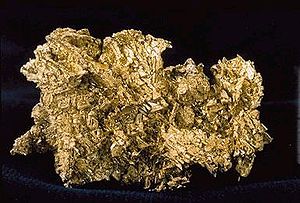
English: Crystaline Gold
English: Crystaline Gold (Photo credit: Wikipedia)
This changes the nature of a "prospect", it means you need to look where others would not bother (or are to lazy to have looked thoroughly). 

Note that when it comes to gold laziness, motivation and value are strongly related to commodity prices

It makes for a completely different story.

So say you are searching for gold - What's the best strategy ? 

When you search for gold, you can:

View of gold miners excavating an eroded bluff...
View of gold miners excavating an eroded bluff with jets of water at a placer mine in Dutch Flat, California, between 1857 and 1870. (Photo credit: Wikipedia)
Try to stake a rich seam,
- hard work, big rewards - might need 
guns and security to stake that claim.


Go on a quest for life-changing nuggets
- grubbing around for massive potential rewards but risk living on fresh air.


Or you can pan in the stream (almost definite winnings, but hardly worth the effort) - 

unless ...

Unless, the value of what you are looking for is going up fast!

For this leg's detour, teams took part in pann...
Panning for gold. (Photo credit: Wikipedia)

I argue that energy savings are already worth prospecting for, using the grubbing in the dirt method and any other that may work !


Here's why ...

Most everyone knows it is stupid to waste energy - it's like walking around with a hole in your pocket.

English: Protest against fossil fuels April
Protest against fossil fuels April (Photo credit: Wikipedia)
Most everyone walks around with a hole in their pocket sometime. (especially if they  have nothing of value in their pockets).

But if I told you we were going to talk a walk to the bank, having filled your pockets before you go - with gold-dust.

if we were going next week, would you make the effort to carefully line your pockets with something very, very sticky this week

 - yes of course you would !

So if energy has been undervalued (I am not arguing this but hey you can run with the power of forty horses over fifty miles for the cost of a can of coke - if you use fossil fuels)

And if energy use (or worse energy waste) is perceived to be like walking around with holes in pockets - AKA - Stupid and short-sighted.

Then -  I would argue we need to review our search strategy.

People are starting to turn over every stone and look in every nook and cranny.

They are renewing their search strategy - by looking where people have rejected options in the past.

Technologies, values, accessibility and motivation have changed.

The day of wild-catting oil wells is over (largely) - this was the oil boom and looked very much like a gold rush.

Coal Shale, shale oil, wind, solar, nuclear deep offshore, arctic are all now being examined in depth (literally ;) - it sounds like prospecting doesn't it!

Well there is a wise adage - 

The guy who gets rich of a gold rush, is the guy who sells the tools. Picks, filters, explosives, beans, pit-props, money bags and prospecting know-how (the treasure map).

So my suggestion to energy managers is that instead of competing with the dreaming fools - you should..
Scene from the movie The Gold Rush. 1925.
Scene from the movie The Gold Rush. 1925. (Photo credit: Wikipedia)
Stitch up the holes in their pockets, get out your maps (energy consumption charts), and check over your equipment. 

Because the winners are going to be the ones that are well-equipped, well-educated, and don't mind looking carefully through the dirt and spoils of the idiots that rushed through on the first wave.

Its time to prospect for savings, because waste is all over the place - its the rich seam of leavings that nobody else can bother with.

And the world can be yours !

Feel free to leave a comment, particularly on where you have found the worst sources of waste, or on cool ways of finding stuff like my article on the Princess and the pea !
Enhanced by Zemanta

Energy Saving Fraud - #1

This post explains one if the easiest energy saving frauds in the world.


Yesterday, we discussed the idea of treating energy managers like mushrooms (keep in the dark and feed BS) and "lies, damned-lies, and statistics" which led to this post. So if you have jumped straight into the page have a read of feeding lies to energy managers first.


The subject today is a simple explanation of why the following is a case of a statistic that is a "damned lie":

"We have an energy saving product that will save you > 15% in 'seasonally adjusted savings'.  We will look at your last six months bills and get a pattern of use that is weather adjusted, we will implement product "X" in summer and monitor for another six months, and then you will use less energy, even after we have adjusted for the weather."


So, what is the implicit assumption here ? -  it is absolutely obvious!


Answer : It assumes there is an the amount of heating energy you normally spend that depends on primarily on the weather !


This sounds reasonable - cold day - more heat - right ?


Wrong !


In reality the vast proportion of buildings do not work like this !

This is an alarming claim, so I will have to explain it (I have met a couple of energy managers over the years who immediately understood this - but it is complex, so excuse me if I spoon-feed a little).

To maintain comfort the above assumption is exactly right - this is the basis of degree-day analysis, by which most of the energy managers in the world are taught to analyse (and reasonably so - "but as a first approximation" ).

Degree-Day Energy Management Theory chart
So here is the theory you were taught (and on which all degree-day analysis is founded)...

As it gets colder, below a certain temperature, energy spend goes up, linearly (AKA red line is straight) with temperature load.

To save energy you need :
  1. to move the green line down (reduce base load)
  2. to make the red line less steep (insulate or improve plant efficiency)
  3. a miracle


And that is pretty much the theory.  We only need to understand how the miracles occur (drum roll ....) !


Now, let us suppose people use the building ! (I know it's a radical concept and  a departure into the unknown that ruins a perfectly good theory ).


They are average people and there are lots of them, so we can describe them in terms of "typical behaviour".


So our very simple occupant people ( ok - no comments : )  are one of three things as follows  ...


  1. I'm too Hot -  I will open the window , turn the cooling on
  2. I'm too Cold - I will turn the up the thermostat or radiator valve
  3. I'm not Sure - I will complain about something else !
If we go on to assume our very simple occupant people are also very lazy, they do these things at different times - when really, really motivated.

1)  - Happens in early summer (when its horrendously hot and the heating is still where they put it !)

2)  - Happens in mid-fall / early winter - when it's getting really cold and the heating is low (or the cooling still on)

3) Ok - so in fact they complain all the time !

These things change the shape of our diagram as follows :

Chart of seasonal energy waste
The seasonal savings con.

If I install my energy saving equipment (it can be a bright orange blob of jelly - it really doesn't matter), and do a six month return survey - "to see how its doing"), I can "reconfigure" your heating system (aka turn it down for summer in late spring or summer), then tell you to continue keep a close eye on energy (achieving some small savings anyway) - My seasonally adjusted savings (for one year) will save a bunch of energy without ANY new technology.

If you are sceptical - look at this graph - The dots are days and the blue area is surrounded by month averages.

Chart of Energy Savings in Buildings automatically identified
Asymetric waste automatically identified by kWIQly


A good energy management dashboard can identify this automatically without site visits - I have NO idea where the above diagram comes from - it is based on an anonymous data feed combined with weather data that kWIQly provides.
Enhanced by Zemanta