Reference

Showing posts with label Boiler. Show all posts

Semi-Digital Control #Rant !

It's been a while since I had a good rant...

So here we go.

We've all heard of digital control (ON/OFF), but semi-digital control is simpler  - (ON) !
Practitioners of semi-digital control fit that bill - simple (as in simpleton) and are the bane of many an energy manager.
1925 Pelapone PD6, 17 litre 6 cylinder, petrol...
1925 Pelapone PD6, 17 litre 6 cylinder, petrol engine-generator set, ex a standby generator at Shrewsbury Hospital Now on display at the Internal Fire museum. (Photo credit: Wikipedia)

Their arguments go something like this;

  1. Our controls company said we should keep the lead boiler enabled at all times
  2. Our chiller manufacturer says the chiller is designed to manage load efficiently and there is no need to switch off.
  3. Switching fluorescent lights off reduces their life and consumes more energy on start.
And the biggest BS:

Preventing overtly flappy action !

So we've been invited to DevFest courtesy of Google  this weekend

Doubtless fun will be had at the Googleplex even if this video is a couple of years old now (but still cool)


This means that Andreas  ( Andreas on kWIQly Team Page ) and I get to drink coffee, learn stuff https://play.google.com/store/apps/details?id=gdg.devfest.ch

A patronising post on energy savings

So today a rewarding look at a couple of charts to look at ( not as immensely boring as it sounds) ...

But first  - Imagine if you will, that you had previously been in contact with us - the upshot being that for a very reasonable price you would be well served in the whole saving energy effectively department. Aren't you lucky - you (being wiser than most) can save time by not reading the rest of this post.

BACK TO REALITY
However, for the rest of you, it is only fair we tell a little about the things in energy management that excite us most.


Picture of a pie and pint taken for enwiki-p's...
A "pie and pint"  (Photo credit: Wikipedia)

Consider for a moment a pub, not just any pub, but a "better" pub. If you have been paying attention you will also know that boiler energy saving is like running a bar !

BTW - a word to the wise ! -  If you have not been there do have a look - firstly for the *ahem* brilliance of the analogy it offers, and secondly for the wonderful picture at the top of the post.


You have to love a disaster it - clearly he does ! 

And what is better than running a better pub I hear you ask (rhetorically) ? -
"Why - drinking in a better pub of course ! "

So, the problem today is as ever how to address the problem
- How do I get to be sitting in a better pub ?

The answer naturally is that as an energy manager - you need one of three things :

a) A better job
b) If a) is not available - more respect in the job you have
c) Failing a) and b) - you need to gain respect.

And that is why we are here ...
CLICK TO ENLARGE
If you did so (that is - click to enlarge) you will have seen that the chart above is of a pub. The energy use to be precise - if you are smart you will be able to figure out when they are open. (And this is why you should know it's a pub!)

The faint line at the top is the most this pub spends (by hour of week).  The green is what it should be using if all is well under the current conditions - and the red - Well the red is the current weeks level of "spillage". That which is to be avoided!
CLICK TO ENLARGE
OK - I was just kidding ! - naturally the chart doesn't show you when they are open. It does show you when they are using energy, and that is not the same thing !

If you are observant you will see that the energy use is "even better than ideal" on Tuesday evening - In other words - a mistake !

Since nobody changed the time-clocks for Daylight Savings Time.

The mice are cosy before the pub opens, and the punters are cold when they leave in the evening.

What is that ugly red spike at 9.am.  ?

The ugly red-spike is a boiler boosting hot water to above its necessary temperature.  We know this because it then switches on and off all day.  This is known as slow dry cycling - the load does not warrant the activity - so the boiler overheats the system, then slowly cools down before doing the same again.

If it just did a little when it was needed - it would cost less, the room temperature would be more stable (more comfortable - and less likely that someone opens the door for a bit of fresh air - as often happens in autumn).

Now there are lots more things I could tell you - like the implications of the high load line over-night (maybe I'll post on that another day)...

So you reward for having got this far is that you are better informed (maybe) - or perhaps more likely - you disagree with drinking beer  - in which case please feel free to express yourself elsewhere !
Enhanced by Zemanta

building management system companies don't know their clients

Building management system companies don't know their clients !

What do I mean ? - I mean that they sell commodities, just as an electricity company sells kWh or a Gas company sells gas and Grundfos or ABB sell pumps, and Weissmann, Hoval, Carrier and Hitachi sell boilers and chillers.
Energy Companies manage by numbers

So what do we mean commodity - a commodity is by nature interchangeable and obviously (and problematically) many control systems are not.

 This is strange, they are completely interchangeable when you buy them (lets face it, they can all read inputs, drive outputs, do a bit of very slow real time control and interact with a network via some network management software) and in this sense they are commodities.

BUT, as soon as you want to modify, change, upgrade or replace some part of a BMS, you suddenly face the nightmare of proprietary software configuration and incompatibilities.


Energy Managers must break the mouldAnd that's dumb !

Another way in which Building management system companies are completely ignorant of their clients, is that to them one I/O is the same price and value as another. So every sensor is in range or serviceable, reachable or not.  But it really doesnt matter to them that one controls a huge chiller plant, while the other is watching the state of a toilet fan.

So what should you do about it ? - refuse to be a number

Recognising that a building management company (or service provider) is motivated by quantity (of hardware, sensors, network topologies etc) and complexity (the less accessible your system is, the more you are tied into a supplier and over a barrel), you should pull in the other direction, simplify and reduce the scale.

From an energy managers perspective there is a really easy way to do this,..

So which handful of pieces of plant if unserviceable would make your life an utter nightmare ?

Let me have a go (lets assume an HVAC and comfort focus here).

The delivered condition of air is wrong - sensor failure will do that The main boiler targeting mechanism is compensated verses outside air and the outside sensors are shot. The compressor bypass actuator is stuck open - no chilling and the flow header is reading low (so you don't know about it!
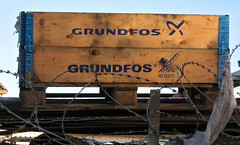
grundfos
grundfos (Photo credit: Johnson Cameraface)

Lo and behold maybe fifteen sensors out of (in bigger buildings) many thousands, and your life is not worth living.  And very easily you could come up with ten scenarios of abject misery.  The key thing is that they time and again involve the same core-functionality of the air treatment plant !  So you do care about 50 sensors or actuators and the building management system companies are interested in selling you another 10 thousand or documenting how each one works, or upgrading the XYZ functionality.

What we try to do is focus on the pain points - and in most buildings there are less than hundred (even very big buildings) - get those right and the rest is detail,  Let them fail and you haemorrhage time, effort and money.  Your controls sytem provider, does not know this about you.  Let him know - channel his efforts focus his mind on what matters to you and your building 

- You may have a client ID - but YOU are not a number 

And knowing that allows you to really show Building Energy Intelligence ! - kWIQly


Enhanced by Zemanta

Boiler energy saving is like running a bar ?

At kWIQly we noticed huge amounts of energy can be saved by controlling boilers or furnaces better. Unfortunately independent reliable advice is hard to find. 


Naturally there are vast numbers of companies trying to sell this or that "solution" , but can they be trusted?  


What I hope to do here is simply to provide a primer or 101 on the subject. If you know what you need - you are more likely to buy it, and not what the salesman is selling. So how do we (you - but let me talk on this occasion as if I'm on your team) save energy?


It's worth looking at this through the eyes of a poor college student (put yourself in his position) who is buying a round of drinks in a crowded bar,  three rules must be observed, not in any particular order.
  • You find out what is wanted - right now (not on the next trip to the bar - not your problem)
  • You try to deliver drinks with least spillage (maximise bang for bucks).
  • You refuse to pay for what the barman spills
Meanwhile the bartender pours what you need (wasting as little as possible) before handing it over. If in some odd world there where more bartenders than were clients and they got ahead of themselves by pouring too many the rest is their problem.


Back in the real world of energy management things are very similar, but there are also some very important differences. Assume we have three boilers (bar-tenders), that you will really deliver heat via pipes (instead of wading through a sea of drunk students) and most of the year you more than enough boiler power (three bar tenders is more than plenty in an empty pub).


The important differences are as follows:
  • Spillage is absolutely unavoidable - the rate of heat lost on the way back from the bar is directly proportional to how full the drinks are ie the thickness of the insulation Maybe we can imagine a little railway track that delivers beers like luggage on a carousel at the airport or dishes in a sushi bar. The hotter the pipe (the fuller the glass)  the more is lost. We could reduce this "transmission loss" through improved insulation, which has very predictable effects (but the benefit is lower the less you are wasting - so it makes sense to evaluate waste before investing).
  • Bar tenders are lazy, boilers are not! A bar tender will only pour a beer when necessary but a boiler lives to work. A boiler can be turned off or turned down, but given the freedom to act within the limits of its' own thermostats a boiler will spend your money just as fast as it can (think of serving water at the bottom of Niagara ) it would spill less if you could turn it down between servings !
  • Boilers are more efficient the harder they work but busy bar tenders make mistakes. So if you are going to let a boiler run, you do want it to run as hard as possible.
  • People know how much they want to drink very accurately (I did not claim this is good for them) - generally it is a simple question of more or not more. Buildings are more choosy -they want a little or a lot or just enough heat to stay comfy.
  • Final difference, heat can be wasted if delivered after people have left the building, but once a bar clears, the drinking stops.  Would you sack a bar tender who left a beer tap running overnight ? - Me too !


So with these differences comes a set of problems, which is not as instinctive as buying a round of drinks.  However, (and perhaps surprisingly) the optimum strategy is not all that difficult to figure out.  Lets go ...


We need to apply a simple set of rules about when to work and when not !
  1. Always deliver heat at as low a temperature as you can, to get the job done (carry half empty beer glasses to avoid spillage unless a full glass is ordered).
  2. Use the least number of boilers possible to get the job done (bar tenders are more clumsy when overworked) - boilers are more efficient when working really hard.
  3. Do not let a boiler "idle" or "tick-over", if it is OK to switch it off -  do so  ! (the hard work reason).
  4. Rooms don't know how much heat they need or when they need it - like drunks.  Watch what is needed, when it is needed and deliver as rarely as possible (off at night)
There is some devil in the detail - lets get our mops out and see if we can sort out that spillage !

How fast should you pump the water round the system ?


Boilers get hot and give off heat - also heat goes straight up the flue (chimney) if it can. Ideally when a boiler is burning gas, you want to carry away as much heat as possible, otherwise it gets lost (rather like a barmen stacking hundreds of beers on a bar that nobody is delivering).  The implication is that heat should be carried away fast.  Each boiler has a "rated flow rate", if you burn fuel without making sure water is pumped fast enough, you are pushing energy up the flue.


You can save electricity by using a variable speed pump  ( a VSD drive or frequency inverter matches the AC supply to a lower rotation speed ) BUT, if water is flowing through the boilers slowly you can lose much much more (a pump may use a few kilowatts to satisfy a boiler that delivers megawatts.


The heat should be circulated around the building fast as well, if it is delivered slow, it must be delivered hot (more losses at boiler and along the journey = full glasses).


If the point of delivery throttles flow when satisfied (the drinkers ease up on their pace is analogous to air conditioning unit cooling or heating valves closing), then there is an opportunity to deliver less - so reduce the boiler heat (deliver emptier glasses) to keep the rate of pumped delivery high - a VSD drive can be an excellent tool in the armoury for this


How many boilers ?


Too many bar-keeps is a really bad idea (hot metal)  suppose you need to deliver a number kW load and you have two boilers that can deliver 650 kW and one that can deliver  400 kW ( use 1000BTU instead of kW if you prefer - the analogy holds) - Its all about how hard you want to push


This means
0 - keep all boiler off 
1-400 use the 400 kW boiler
400 - 650  use the 650 kW boiler
650 - 1050  use the 400 kW boiler and the first 650 kW boiler
1050 - 1300 use the two 650 kW boilers
and above this use all three boilers.


This is called demand sequencing and from three boilers you can have six steps. For historical reasons (a reversible camshaft) there are traditionally only two sequences of 4 possible steps implemented summer-winter-winter and winter-winter-summer (where the bigger boilers are called the winter boilers) - This is very weak thinking.  What is notable in the "correct" solution is that the smallest boiler goes on and off at each load step change.  This is very important because a "blown" or "charged" boiler wastes a lot of energy switching on or off (the combustion chamber is purged with cold air before and after burning to reduce explosion danger -by clearing out un burnt gasses.


Demand management - How do you know how much to pour ?


Sorry - this is too big a topic- the subject of a later post, but as a starter, given that buildings are built to keep heat out, and that we sleep at night it should be no surprise that weather and time of day are the two biggest single factors in deciding.


Hope you enjoyed the post - follow @kWIQly to be advised of the future instalments

Enhanced by Zemanta