Reference

Showing posts with label Smart Grid. Show all posts

Google outsmarts the smart grid

Will Google take a multi-trillion dollar industry to the mat?

In the press this week Bloomberg broke a story:
Google Said to Plan Energy Push With Tools for Utilities 

and Forbes responded 


As noted this is probably an alternative to the energy saving play Google made some years back http://www.google.com/powermeter/about/

They backed out of powermeter in late 2011, surrounded by rumours that the utilities did not want to play ball (i.e. share their client data with Google ) despite Big Data analytics being of obvious potential interest to their end-user clients.

If so the game-plan for the utilities may have back-fired as this new Google approach looks far better thought through and far more of a threat to the utilities.

But these articles miss the point !

Why ?  - While united the Smart Energy Demand Coalition is far more interesting than any individual utility (because it represents an umbrella concept) , I believe Google is finding a path straight to the money!

 Members of Smart Energy Demand Coalition might all want to watch Google:

SEDC Executive Members - An influential bunch (particularly in Europe)
A little background - The Automatic Meter Reading (AMR) market is a $multi-billion land grab that is going on with big utilities, and big metering operations participating. Note: the smart meter industry is a tiny subset of AMR

However it is famously said that:

During a gold rush you want to be either the guy selling picks and shovels or the gal making the jewellery.

I believe (and suspect Google sees) that these players are all leaving most of the money on the table,


SEDC Associate Members - No less impressive Global Titans here too!

This team looks pretty Smart to me to so how can Google Outsmart them ?

This play is more mature - 

Absent deregulated markets utilities "own" their clients ( In the US location largely determines your utility provider) . 

So deregulated markets face more competition than US counterparts (like uncompetitive providers of last mile ISP access in the US).

Maybe this is why the SEDC first sprang up in Europe as brain child of VaasaETT (The Global Energy Think Tank)

However, even in the US there is a "bigger grid" where loads can be advantageously shed between states (because time-zones and weather events and hence demand are highly regionalised too). 

In this market the infrastructure provider is key and no utility can own the market. So Google can access this without co-operation or partnership  from utilities, because those that will not sit at this table will lose!

And here is the winning play

If Google can also deliver demand intelligence (via some grid independent API) at the point of use they can effectively cut out the utility entirely (except as low-margin commodity provider).

The point is that however big the AMR market is, the main purpose of that market is to deliver efficiency and data intelligence to end users and support them better by smarter matching of supply to demand.

Almost universally providers of meter data also provide visualisations (charts) because it is easy.

Very few offer analytics  (kWIQly clients are an exception), and we know Google is in this market.  It is acting on intelligence delivered by analytics that is where the value lies.

The domain intelligence and pattern recognition that can unbundle value from these near infinite (and fast growing) data streams and then package it up as simple sophisticated solutions is worth a lot. It scales and reduces utilities back to what they are - a pure commodity play.

Prognosis

It is very simple and needs only a superficial understanding of how industrial disruption ( http://www.claytonchristensen.com/books/the-innovators-dilemma/ ).

Either existing industries (AMR, Utilities, Construction and Heavy machinery) will collaborate to deliver the value the markets (and Climate Change) are crying out for, or Google will pip them at the post.

The requirements are really quite simple -

1)  Good real-time tariff APIs for end-users (via packaged intelligence) to know what energy costs and likely will cost
2) Ability to mine for energy saving opportunity in AMR data (pattern recognition)
3) Connectible plant that can exploit the opportunities so discovered automatically

Either this will be delivered piecemeal (and a later consolidation and sharing of protocols will happen) or it will be delivered via a protocol open to all from the start - which will freeze out Google as a commodity provider (except where they really have the specialised domain expertise ).

Punditry

As a big player in this field you need to prepare three things:
  1. A collaborative attitude with peers (utilities and network infrastructure must play well with competitors via open protocols etc - so that specialist service providers have access to the field)
  2. Emergent domain specialist operations (kWIQly is a bit too small just yet) must be hand-held to break into big markets (in land-grab markets first entrants that scale fast hold long term estate value)
  3. A dialogue with existing (commodity clients) that can up-sell and cross-sell new differentiated value propositions identified as suiting them from their energy data - this will reduce churn (enhance client retention) and convert their data into an asset - rather than leaving it unexploited in a database.
As a smaller niche player:

It's all about exposing value (eg via APIs) and creating value propositions that exploit network effects (Small businesses or startups that do not understand this concept need to) and being prepared to partner for growth (rather than trying to row organically) - because speed is of essence.

 As Google

Define the Smart Demand/Supply interfaces to allow the niche products to bypass the utilities with readily installable Gizmos and cut out the middle man. (Maybe acquire these once they show traction)

Meanwhile provide a set of tools that utilities must use (or suffer the consequences) to ensure their adoption of your API's - Oh but you are doing that already !
Related articles

A smart-meter, smart enough to listen to

Recently I blogged "What would a smart-ER meter say?" - concluding;
So if we were to: 
  1. list smart-meter capabilities against a list of legitimate audiences,
  2. gag them ruthlessly when they are not interesting or not welcome,  
  3. apply expertise where needed,  
  4. inform those who have a need to know and who have an ability to act,
  5. in a language they understand,
  6. when they want to hear it !
- wouldn't that be nice ? !
and that's my subject for today. However, while I fully intend to comment, perhaps our start point would be the answer to a "smart -er meter" question:

"What do I want from my smart meter ?"

and obviously this depends on who you are - i.e. the audience

Equally it depends on the options - ie "What can a smart meter do ?" 

But I am assuming that we all have an idea of these points (even though definitions of smart meters change around the world and amongst different user groups). So for the purpose of this post I will adopt a very broad definition - 

Broad Smart-Meter Definition: 
"An ability to gather relatively high resolution energy data, process and make results accessible via some means, while it is of relevance to some interested party"
You will notice that this definition includes pretty much any remote Automatic Meter Reading functionality (and does not require an in-property display device !!!)

So back to the post - it's worth considering three aspects of any message, the audience, the intent and how the message is to be "consumed". 

(smart-meters need to convey something useful to someone who cares or they are simply destined to be expensive paper-weights)


A very expensive paper weight.
unnecessarily heavy IMHO - but then
I'm interested in the functionality - not the show
Getting these straightened up allows us to think about designing the communication.

So to the audience - perhaps we need to first address "non-core users"

Smart meter advocate ? - Probably not so much !
Various factions in the world of smart-meter paranoia, (some literally in the tin-foil hat brigade), posit outrageous theories about smart meter technologies. 

Much as I will fight for their right to be utterly bonkers to my last breathe, I also won't spend too long dwelling on how best to get my message to them.  

Classify these as:  "long-tail late-adopters" for the technology I believe in.

Politely put - "They can't be allowed to matter !"

The real intent behind Smart-Meters

If we put aside the notion that smart-meters are guidance beacons for aliens, or similar, and go mainstream, then we see three fundamental benefits that are derivable from a data history of energy consumption, and these are sufficient to define our audiences.

1) Accounting for value transfer

Whether a meter reports a fiscal transaction or not, energy has moved. If the energy is of value to the supplier, or to the recipient (not always the case) then we can think of this as an accounting transaction. A financial credit and an equal and opposite debit.

This leads us to use cases that include:
- bill verification (I've said this before, but how many industries can you think of where you have to routinely pay to check billing ? !!!)
- tariff analysis (in competitive markets, standardize data formats would allow utilities to bid competitively and automatically for supply contracts through a clearing market - surely this would be more efficient than giving clients the buying analysis responsibility)  
- purchasing support (typically larger users)
- cost attribution (particularly sub-metering)
- financial planning (generally this is very naive)

These "intents" can be associated with "audiences" in accounting and purchasing functions. Data can be historic and patterns of interest are relatively trivial (base load, peak use and so on), and are often determined by the market conditions offered by utility suppliers and buying clubs.

Although higher resolution meter-readings are changing demand pricing which makes for more efficient markets and provides incentives for demand control, there is little new here - people have always had to pay for products they consume.

2) Energy Efficiency & Improving Effectiveness

This is where the smart-meter needs to become smart !
This will be the specific subject of my next post and is the greatest core-value of Smart-metering and AMR in my view (do signup on the RSS feed if you want to catch it when it comes).


Just as a smart meter needs to be timely, concise and on point - I will try to do the same :)

3) Enabling Peer Co-operation Between Users 

This is where controls need to become smart and it closes the smart-meter feedback loop!

There is huge scope to do this using within single buildings or sites (eg scheduling loads so the aggregate is spread to avoid expensive low efficiency demand peaks) or in the case of boilers ensuring loads synchronise so that a firing boiler works hard and serves most purpose.  

To do this involves exposing not only demand signals (I need heat / I don't need heat) but also forecast loads (From  an AHU perhaps - "I am OK for heat because can recirculate until outside temperature drops below X") .  This level of sophistication implies a market for heat (or chilling) in a  building - and since heat and chill are supplied in various quantity to various functions at various cost - a market solution is needed (both within the single site and at a smart grid level)

Related articles
Enhanced by Zemanta

10 Smart-Meter Answers - why gas before electricity ?

Hopefully this short post will spark or fire up some debate.

Assume you have 100 buildings and 100 smart-meters and each building uses gas for heating & hot water and electricity for cooling and lights, socket loads etc. So each building for primary utility supply requires two smart-meters without considering water.

So should you install smart gas meters then electricity or vice-verse ? I know what I think - read on..

Smart Grid - no substitute for energy management


Perhaps the first issue that arrives with any discussion on Smart Grid is that it is poorly understood. It must be carefully distinguished from energy management for which it is no substitute.


This is a characteristic it shares with snake oil and many a "panacea for all ills"
. 
However the article that provides this image does rather a good job -the definition is tightly defined but broad...


Smart Grid is a new architecture for enabling the two-way flow of electricity and information
http://technorati.com/technology/article/smart-grid-technology-major-topic-at/#ixzz1iIlNN0ox

This is important because if you cannot tie something down in terms of objectives it is extremely hard to show whether it is doing its job or not. 


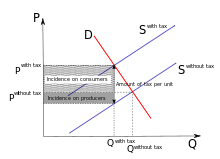
I think it is possible to tie this down a little further. The idea behind the Smart Grid is that if all parties between Generator and consumer are aware of volume and pricing implications of demand and supply, then work that can be re-scheduled to fit a time when supply is more flexible ("price-elastic" in micro-economic terms) - the costs will not be forced up so much by additional demand, as at peak times when supply is highly inflexible - near peak production and market supply is therefore price-inelastic


For the theory :  http://en.wikipedia.org/wiki/Price_elasticity_of_demand
So in summary the Smart Grid comprises technologies that increase the elesticity of markets by enabling rapid information regards levels of supply and demand. It is a concept that increases the efficiency of the market.


Suppliers will be able to schedule more efficient supply as loads patterns become smoother and more predictable, because demand is driven automatically by devices "intelligent" enough to schedule activity to map onto times of low demand and more flexible supply.


So a hot water heater can operate overnight at times when demand is low and thus save the consumer money while freeing up capacity during the day.


However the idea is NOT completely new and does not equate to energy management


Where I live in Switzerland for more than twenty years house have received a "low cost" signal (driven by a randomiser to stop surges at particular price points) that allows exactly this functionality in a rudimentary way


In the title, I said that the Smart Grid is no substitute for energy management. Certainly it is a very important and established part of distribution technologies and as such is a buzz word that is being used to justify much of the infrastructure investment that is overdue in any case, and, in that very niche definition it manages energy. However, what does it not do ?


We can define energy management as ensuring that energy is consumed to meet needs.


However, what constitutes need - The most basic function of heating a building must consider occupancy times, the age of occupants (elderly people need more warmth as do the young or sick), activity levels - you need less heat when you are playing a game of rackets than when watching television, the weather outside and naturally alternatives. 


 These aspects are not considered and this information is not conveyed by the "Smart" Grid and as such the home of energy management must remain local - we need local energy intelligence in a building - or as we refer to it "Building Energy Intelligence"